
Award Won!

Best Social Media Crowdsourcing Game
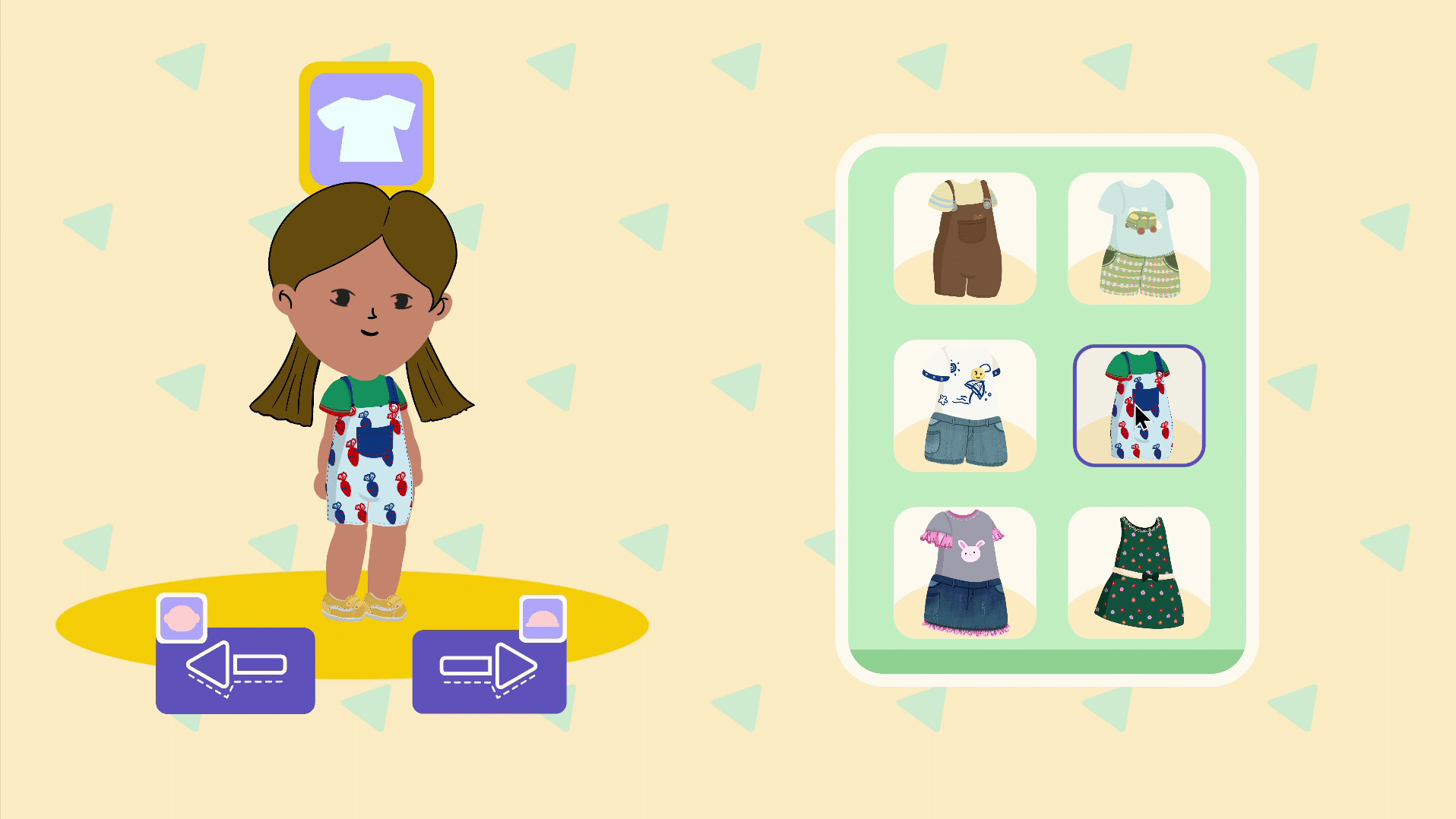
SoKids (Honorable Mention)

Organization:

Carnegie Mellon University

Dev Category:

Release Year:

SoKids is a game-based assessment tool designed to help researchers study how children ages three to six perceive and respond to social categories. Instead of asking children to explain their preferences directly, SoKids embeds research tasks into simple, age-appropriate game interactions. As children make choices, move characters, and interact with different groups, the system records behavioral data such as selections, proximity, response time, and resource distribution. The project explores how game design can make developmental research more engaging for young children while supporting more scalable and consistent data collection for researchers.

Game Overview

SoKids presents children with simple social situations involving choosing peers, joining groups, sharing resources, and deciding who they would like to interact with. These activities give children opportunities to express how they notice and respond to social differences in an age-appropriate, playful context. The game does not explicitly teach children which choices are “correct.” Instead, it is designed to surface children’s existing social understanding, preferences, and categorization patterns through interaction.

Because of this, SoKids functions primarily as a game-based assessment rather than a traditional instructional game. Its educational value lies in creating a structured environment where children can practice making social decisions while researchers study how those decisions reflect early social cognition.

The player’s goal is to move through a series of short, age-appropriate social situations and make choices about the characters around them. Depending on the activity, children may choose who they want to interact with, join a group, place themselves or other characters in a space, or distribute resources among characters.

The challenge is intentionally simple so that children ages three to six can understand the task without extensive instructions. There is no single correct answer. Instead, the game gives children enough agency to make meaningful social choices while keeping the interaction structured enough for researchers to compare behaviors across participants and study conditions.

SoKids is designed for two connected audiences: young children and researchers. The direct players are children ages three to six, who interact with simple, touch-based activities designed around their developmental abilities. The system is also intended for developmental psychologists, HCI researchers, and other researchers studying early social cognition, who use the game to configure study conditions and collect behavioral data.

Because SoKids is a research assessment rather than a conventional educational game, the child is the participant while the researcher is the primary user of the broader assessment system. The interface, interaction length, and instructions are designed specifically to reduce verbal and cognitive demands for preschool-aged children.

SoKids assesses children through behavior embedded directly in gameplay, rather than through scores, quizzes, or right-or-wrong answers. Each activity is designed around a specific social decision, such as selecting a character, choosing a group, positioning characters relative to one another, or distributing resources.

The system automatically records behavioral measures including first selection, final choice, proximity and distance, resource distribution, response time, and total interaction time. These measures allow researchers to examine patterns in how children respond to different social categories and experimental conditions.

Researchers can also configure character attributes and study variables before a session, allowing the same interaction structure to be used across different conditions. The goal is not to judge whether an individual child performed “well,” but to provide consistent behavioral measures that can be analyzed across participants and conditions as indicators of early social cognition.

Game Specs

Game Engine
Operating System

Game Video

Play the video below to learn more about SoKids (Honorable Mention)